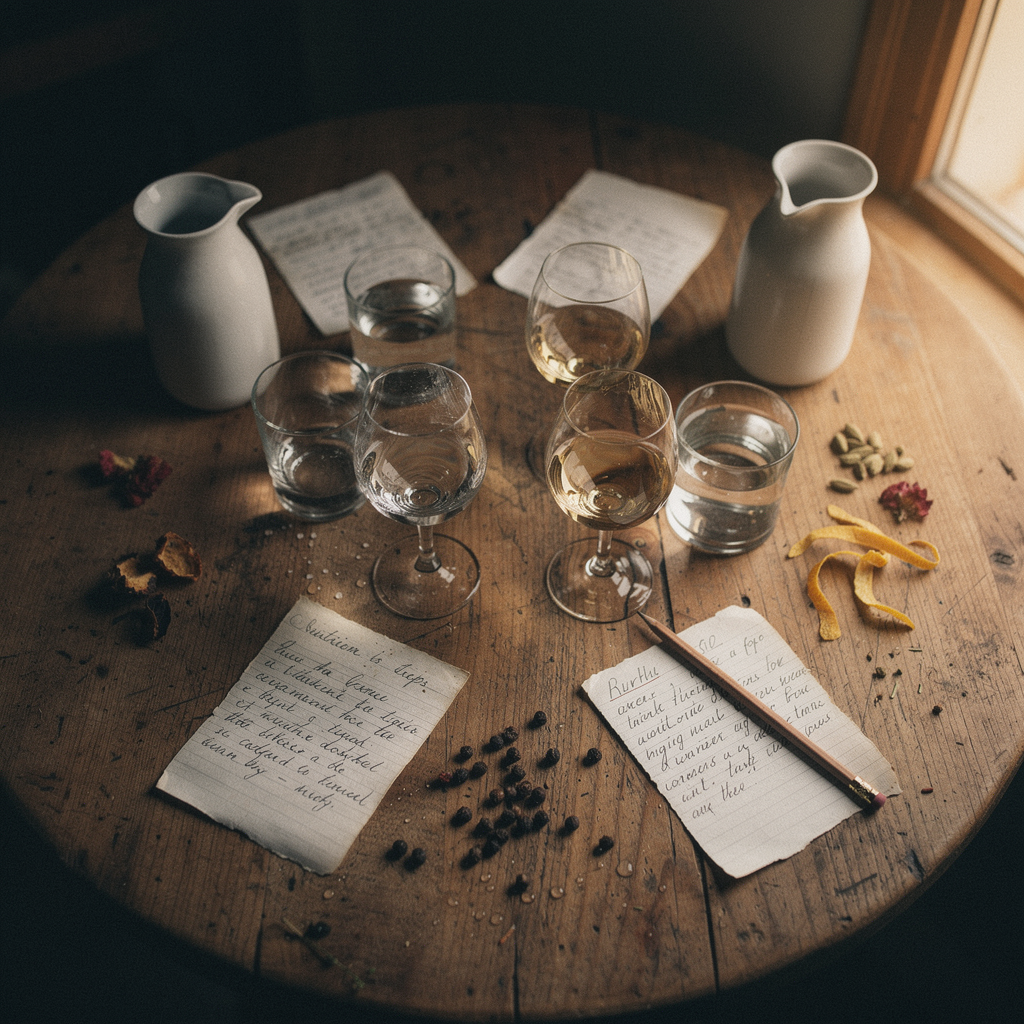
A gin tasting is not a seminar. It is an evening with friends where you discover something together — what a particular gin is, how it differs from others, which botanicals you recognise, which one you like and why. No prior knowledge is required. Only curiosity.
This guide is for the host who wants to prepare the evening without being an expert themselves.
How Many Gins, How Many Guests
Three to five gins is ideal. Fewer and the comparison lacks breadth. More and the palate fatigues before the last gin. We recommend a small selection with a clear theme: for example "Swiss gins", "alpine gins" or "gins with pronounced herbal notes".
For groups up to eight people, one bottle per gin is more than enough — 200 ml per gin will do. Allow roughly 15 to 20 ml per gin per person for the pure tasting.
The Setup
Each guest needs:
- One copa glass (or any tulip-shaped glass) per gin — or alternatively one glass rinsed with still water between samples.
- A glass of still water for palate-rinsing and opening aromas.
- A neutral bite for palate-resetting: plain white bread or unflavoured crackers. No herb crackers, no flavoured bread.
- A small notepad and pen. Notes are not snobbery — they help you remember at the end of the evening what struck you about the second gin.
The Order
Light before heavy, fresh before spiced. Begin with a bright, clear gin — high juniper content, low botanical complexity. End the sequence with the most intense, most heavily spiced gin. Solstice Gin sits well in the middle: complex enough to be interesting, not so dominant that it eclipses everything that follows.
What to Say — and What to Leave Out
As host you don't need to prescribe aromas. Better to ask open questions: "What do you notice first?" or "How does this differ from the one before?" Confronting guests with technical vocabulary silences them. Confronting them with questions makes them talk.
A good moment: after the third gin, pause, offer water, let people reflect. The tasting is not a sprint.
The Ending: Building a G&T
The best ending of a gin tasting is not another neat gin. It is a G&T. Let each guest build a drink with their favourite gin from the tasting. Differences that are subtle neat become clearer with tonic water. A gin you liked neat can disappoint in a G&T — and vice versa. This is the moment when an evening forms opinions.
Garnish options on the table: cucumber slices, orange zest, rosemary sprigs, dried apricot strips. Everyone garnishes by instinct. No wrong result.
What You Take Away
A good gin tasting does not end with a verdict on which gin "is the best". It ends with the awareness that gins are different — not in a hierarchy, but in a landscape. One fits as an aperitif, another as a digestif. One lives in the G&T, another neat.
That awareness is the goal of the evening. Not expert knowledge — but an informed curiosity that stays.