Most people know gin as a cocktail ingredient. As what gives a G&T its character, or as the base for a Martini. That is entirely legitimate — but it is only half the experience. Understanding how gin is built means drinking it better.
This guide applies to any gin. It applies especially to Solstice Gin, which is designed to be drunk neat.
The Glass
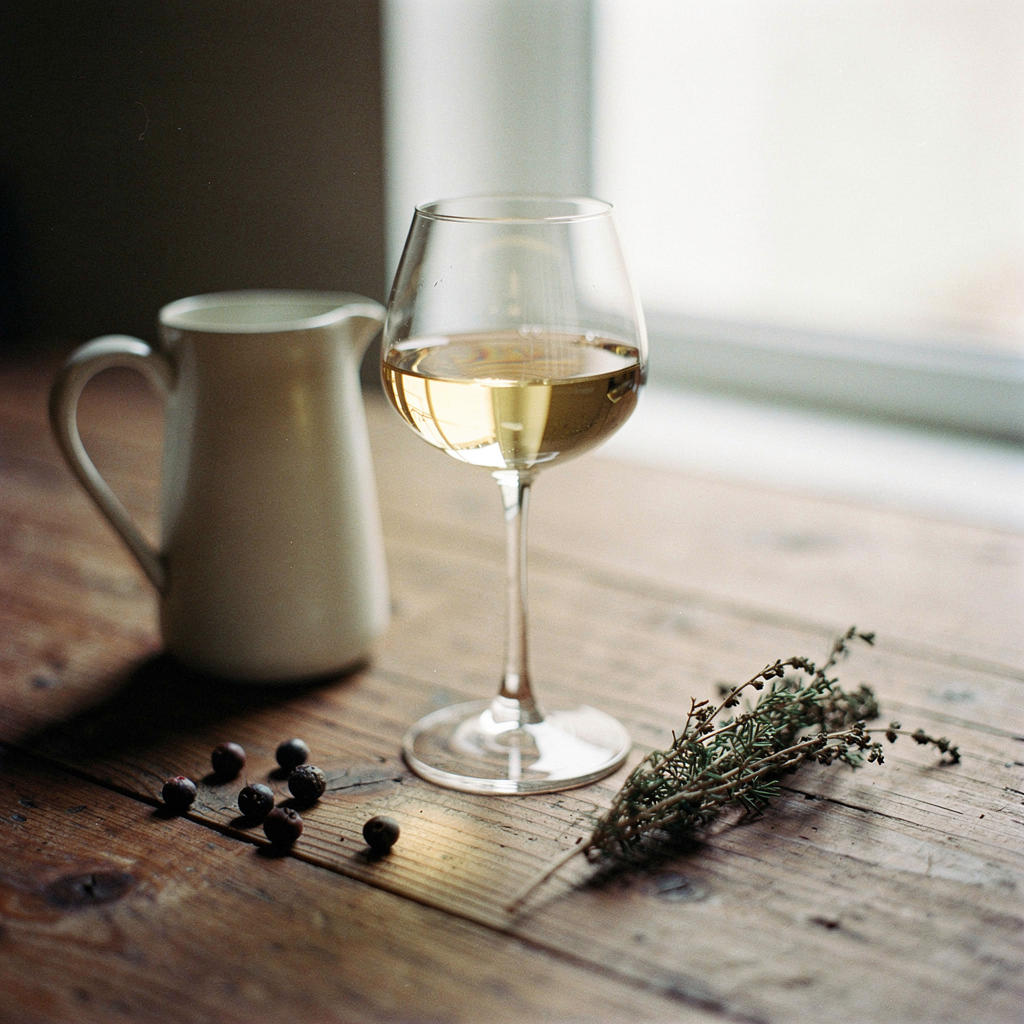
Start with the right tool: a copa glass or tulip-shaped glass is ideal. It concentrates aromas upward and allows the nose to fully explore the aromatic structure. A highball glass, as used for G&T, disperses aromas in all directions — no problem in a cocktail, but information lost during tasting.
No ice on first approach. Cold closes aromas. Lightly chilled — around 14 to 16 degrees — is the ideal entry point.
Step 1: The Nose
Hold the glass at chest height and approach slowly. Don't inhale deeply — scent gently, with your mouth slightly open. The first wave reveals the most volatile compounds: in Solstice Gin this is usually juniper, followed by a floral elderflower note.
After a few seconds: bring the glass closer, second approach. The deeper notes now appear — the herbal bitterness of the gentian, a slightly resinous background hum. Note mentally what you perceive. No technical vocabulary needed: "forest", "herbs", "flowers" are just as valid as "monoterpenic juniper notes".
Step 2: The Palate
First sip: small, and let the gin rest a moment on the tongue. What appears first? In Solstice Gin it is juniper, followed by the herbal notes.
Second sip: chew the gin. Literally: light jaw movements activate additional taste receptors. The mid-palate opens. This is where the alpine herbs are clearest — the gentian, the elderflower, the faintly resinous note.
Step 3: A Drop of Water
Add a small splash of still mineral water — about five to ten per cent of the volume. Stir briefly. Taste again.
What happens: water slightly lowers the ABV, releasing aromatic compounds that were bound at higher alcohol content. New notes suddenly appear. In Solstice Gin, water opens a fresher, almost grassy element — the alpine oregano, barely perceptible neat, becomes visible.
This is not a trick, it is science. Whisky drinkers have known this for centuries.
Step 4: The Finish
Swallow, and wait. The finish is what remains on the palate after swallowing. In Solstice Gin it is the gentian: a slight, pleasant bitterness that lingers long and invites the next sip.
A long finish is not in itself a sign of quality — but a nuanced finish is. Notice whether the bitterness is dry or soft, whether fruit follows, whether warmth builds.
What Tasting Changes
Someone who has tasted gin attentively once drinks it differently afterwards — even in a cocktail. You begin to notice how a particular gin behaves in a G&T, which botanicals remain perceptible through the tonic, why some combinations work and others don't.
This is not expert knowledge. It is attentive drinking.