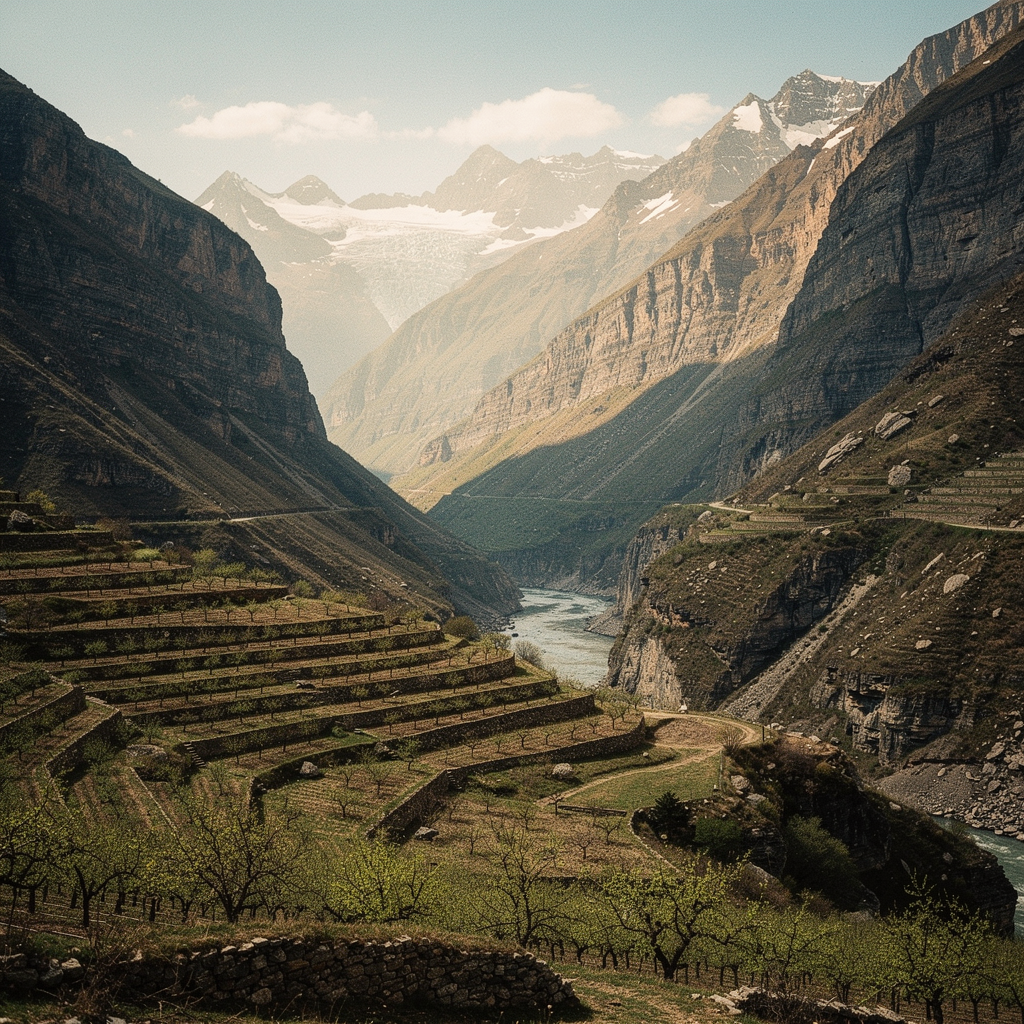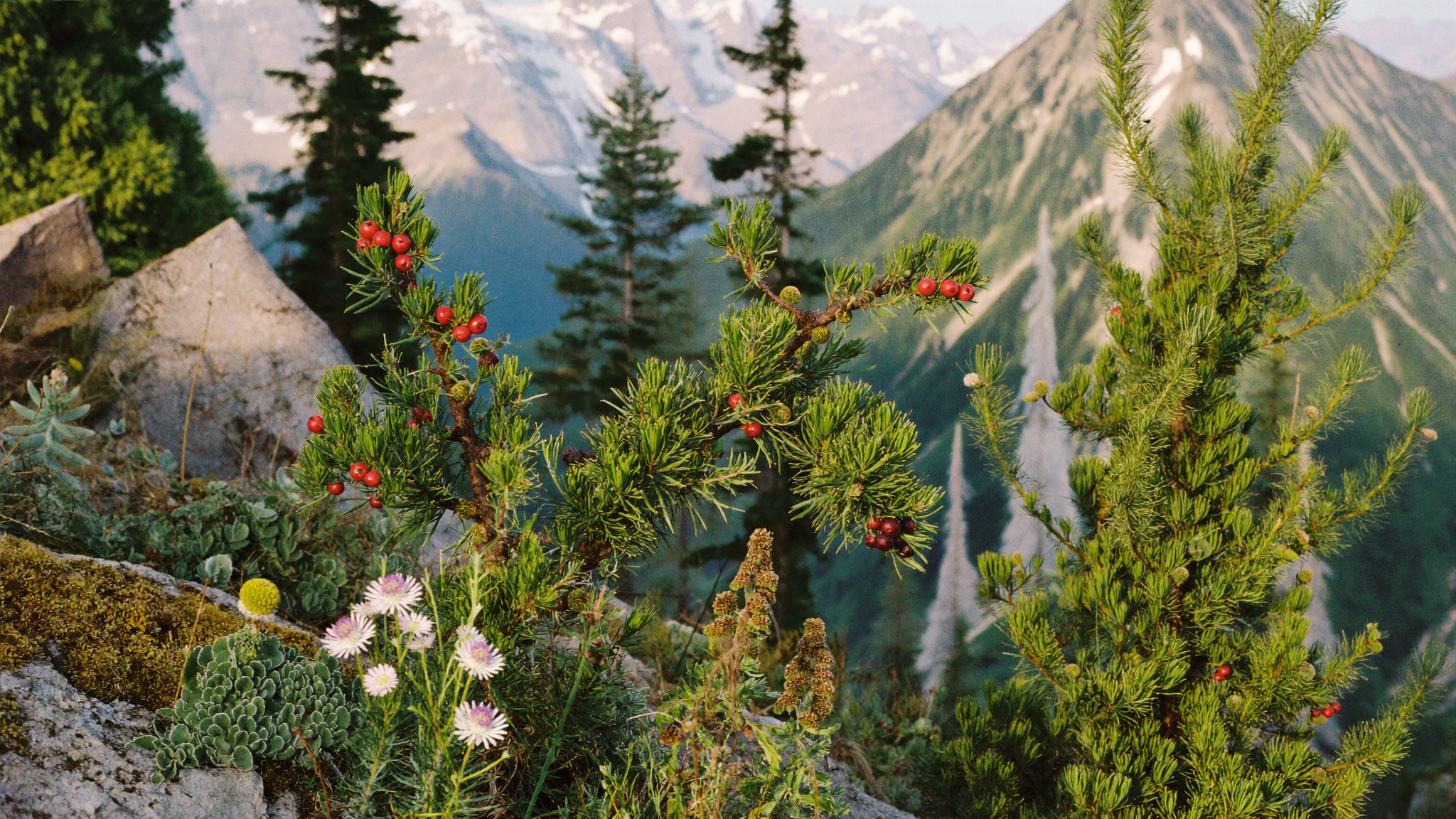
In Valais, juniper grows differently. More deeply rooted, slower-growing, more intense in aroma — because it struggles against short summers and long winters above 1,200 metres. These conditions aren’t a disadvantage. They are the reason we source our botanicals here.
The Secret of Altitude
Essential oils form in plants as a defence mechanism. The more extreme the climate, the more concentrated these compounds become. That’s why mountain juniper smells more intensely than its lowland counterpart. That’s why gentian at 1,500 metres is more bitter, more complex, more alive.
In Solstice Gin, this isn’t coincidence. It’s method.
The Botanicals of Solstice Gin
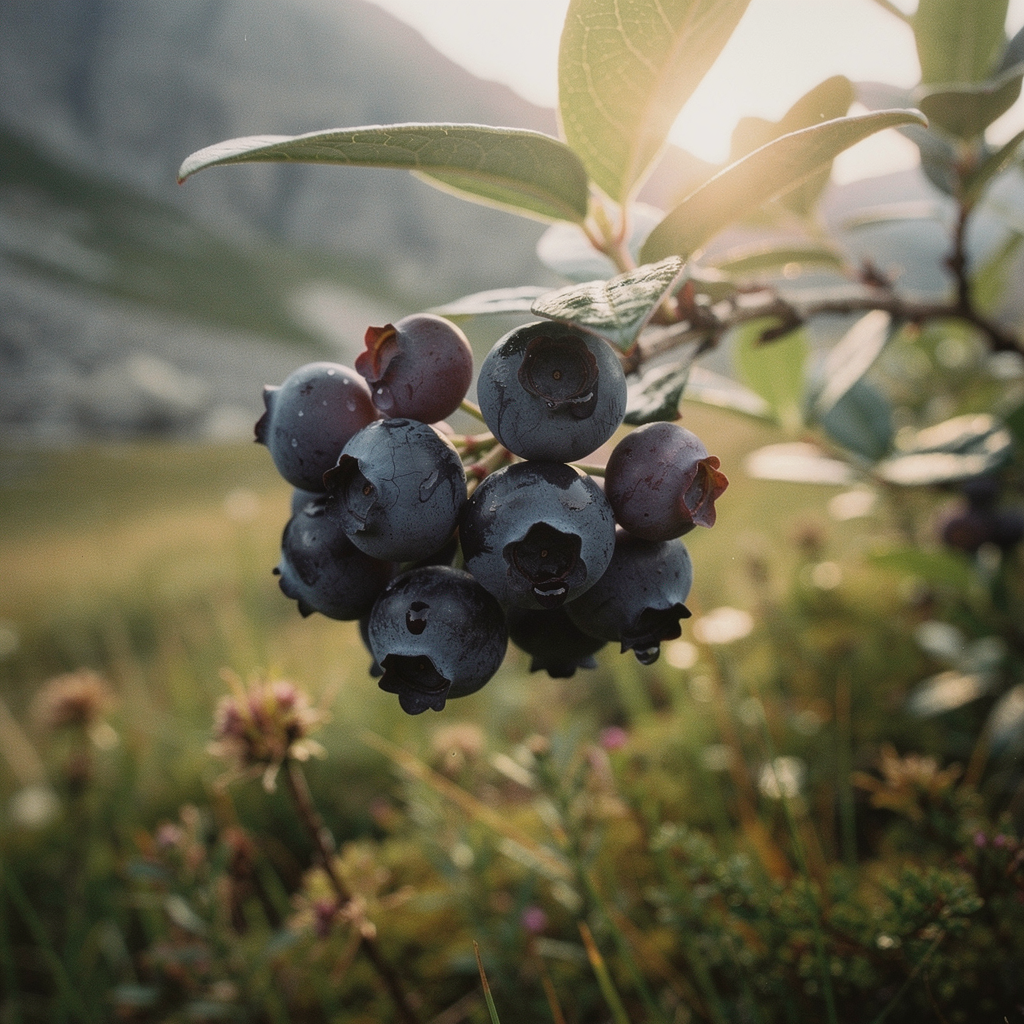
Juniper forms the backbone of every gin — tradition demands it, and we hold to it. What makes our juniper distinctive is its origin: the sun-facing slopes of the Rhône Valley above Raron, where dry mountain air and cold nights concentrate and intensify the berries.
Alongside it:
- Gentian — the bitter soul of the Alps. It gives Solstice Gin its characteristic long finish and an earthy depth that can’t be bought, only found.
- Alpine oregano — an almost-forgotten wild herb that grows on damp hillsides, bringing a slightly resinous, spiced note to the distillate.
- Elderflower from central Valais — soft and floral, an elegant counterpoint to the juniper’s power.
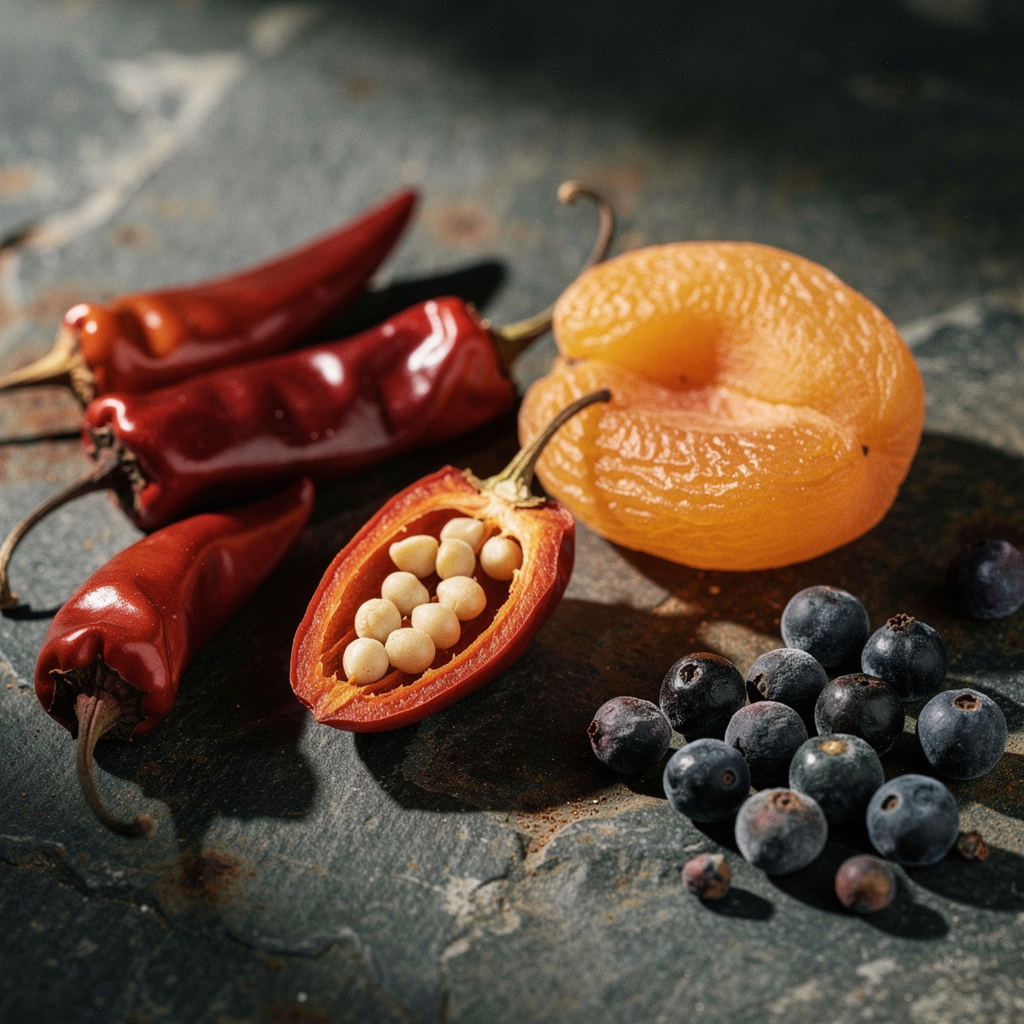
- Coriander seed and citrus peel — deliberately sourced from further afield, because their bright freshness provides a balance to the alpine botanicals that we can’t find locally.
Foraging Rather Than Buying
Some of our botanicals come from local herb growers who have been working their land for generations. Others we gather ourselves — on foot, at the right seasons, in the right spots across the Rhône Valley and surrounding mountain slopes.
This isn’t a romantic gesture. It’s a quality decision. Knowing your botanicals means working them better: you know when gentian root hits its aromatic peak, when juniper berries have reached the right ripeness, how a dry summer shifts the profile.
This closeness between raw ingredient and distillate isn’t possible at scale — and that’s precisely what separates a small distiller from a large producer.
From Field to Still
After harvest comes gentle drying — short enough to preserve volatile aromas, long enough to remove residual moisture. Then the botanicals macerate in high-quality neutral spirit before being distilled together.
How long the maceration runs, at what temperature we drive the still, in what order the botanicals go in — these are variables we recalibrate with every batch. There is no final formula. Only one that must be rediscovered with each harvest.
What This Means for Your Glass
Solstice Gin tastes of Valais. That might sound abstract, but it’s entirely concrete: the herbal character, the subtle bitterness, the faint resinous note in the background — this is the result of this landscape, this altitude, these seasons.
No other place would produce exactly this gin. That isn’t a marketing message. It’s geography.