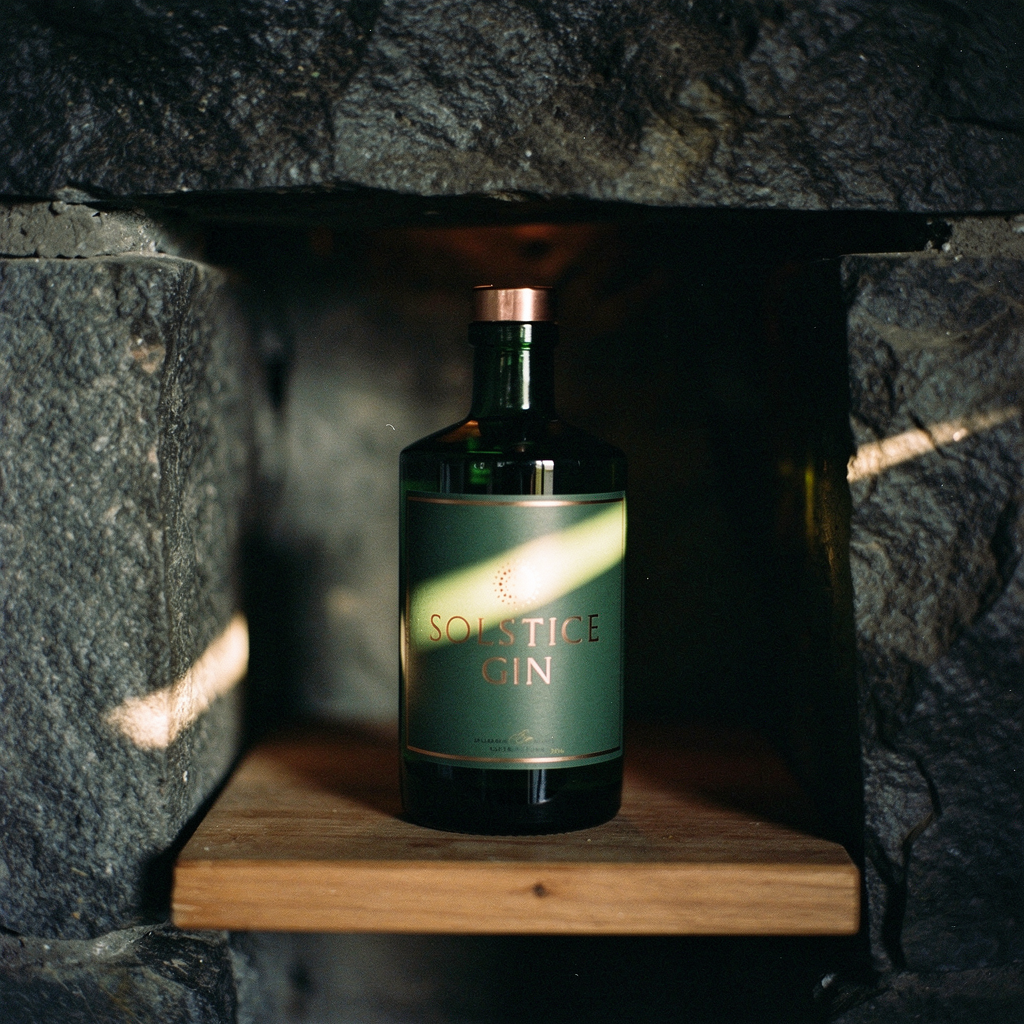
On the label of every bottle of Solstice Gin it reads: "single distillation". This is not decoration. It is the brief summary of a production philosophy we reconsider with every batch.
What Double Distillation Does
Distilling twice raises the ABV and removes further unwanted compounds from the distillate. The result is purer, technically flawless — and often somewhat flatter. Because at each distillation, it is not only the bad compounds that are removed, but also part of the complex aromatic substances that give gin its character.
Industrial distilleries aiming for maximum neutrality sometimes distil five times or more. The result is an ethanol barely distinguishable from absolute alcohol. Ideal as a carrier. Poor in character.
What Happens in the First Pass
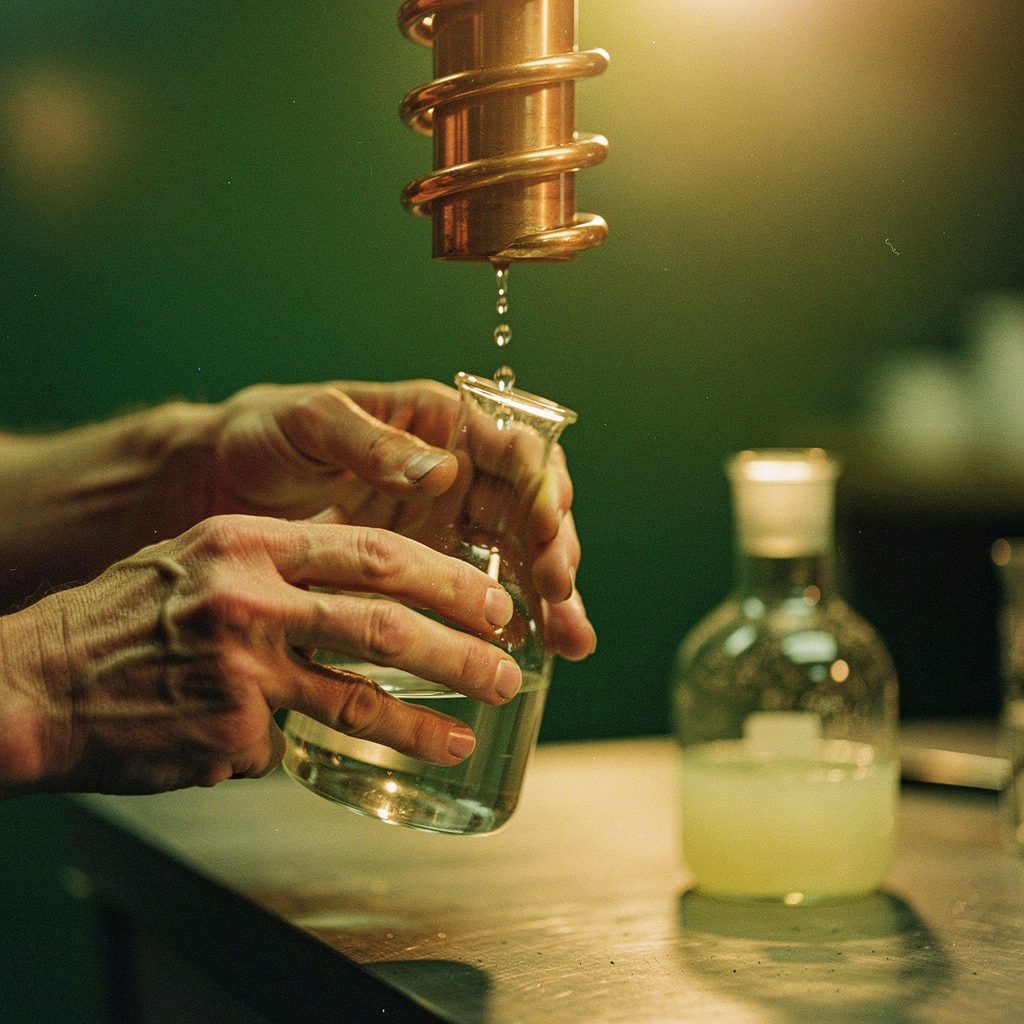
In our single distillation, we run the process slowly. The still is heated gently, the botanicals release their aromas in stages. The most volatile compounds come first — that is the heads cut, which we consistently separate. Then comes the heart: the actual Solstice Gin. Complex, multi-layered, alive.
At the end come the tails — heavier compounds we also separate. What remains is a distillate that has given everything in a single pass.
The Cut as Craft
Distilling once means that the cut — the separation of heads, heart and tails — is the most important craft decision of every batch. No timer, no algorithm. Prisca Salzmann stands at the still and decides by smell and taste.
This decision influences everything: how long the finish is, how fresh the entry, how deep the middle. An early cut makes the gin fresher but less complex. A late cut brings more depth but also heavier notes. The optimal window lies precisely between the two — and differs slightly with every batch.
Yield vs. Quality
Distilling once and making tight cuts costs yield. From a given quantity of botanicals and base spirit, we recover less finished gin than someone working with wider cuts or double distillation. This is deliberate. We choose quality over volume.
It is also why a bottle of Solstice Gin costs what it costs. Not for the packaging, not for the marketing. For the process.
What "Single Distillation" Tastes Like
Direct comparison is the most convincing argument. Taste a doubly distilled gin of known quality alongside Solstice Gin. The difference is not imagination: the Johann is more complex in the mid-palate, the finish is longer, the botanicals are more present. That is not a promise. It is chemistry.