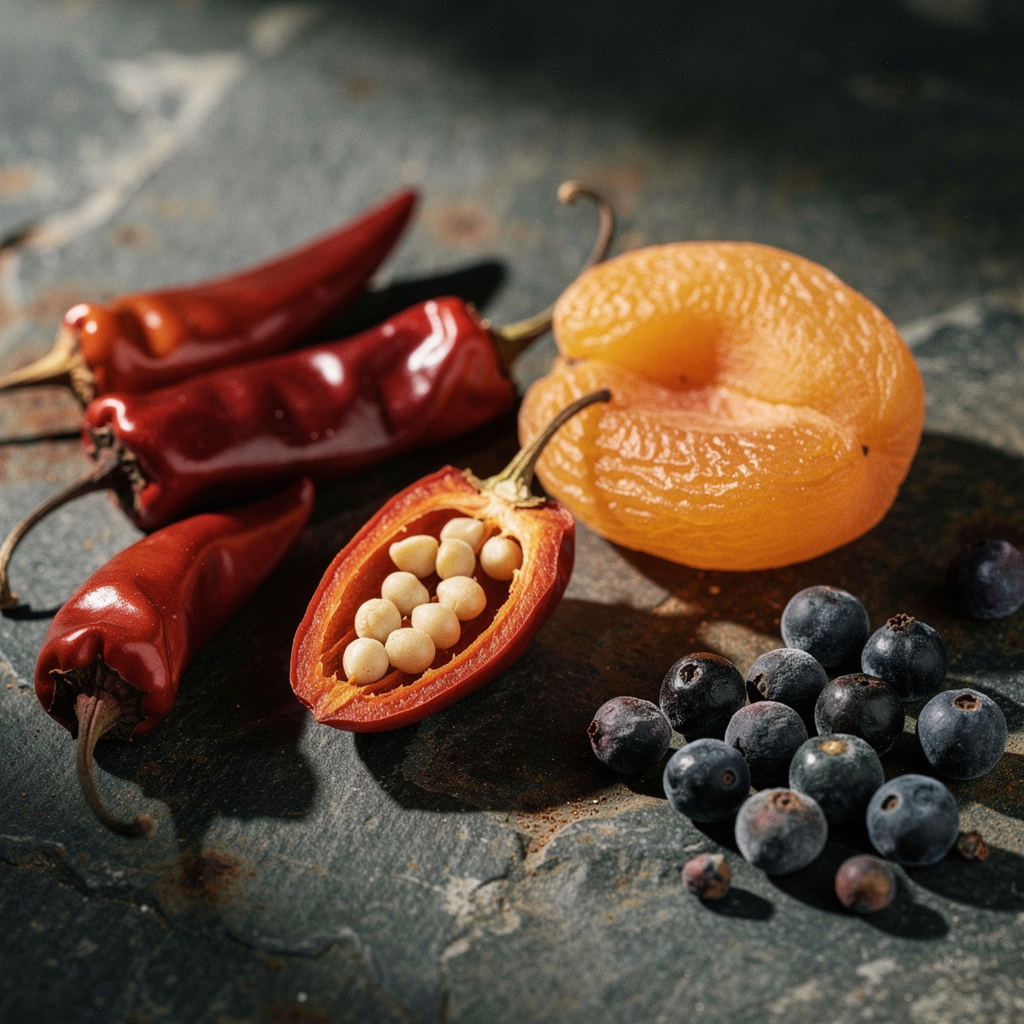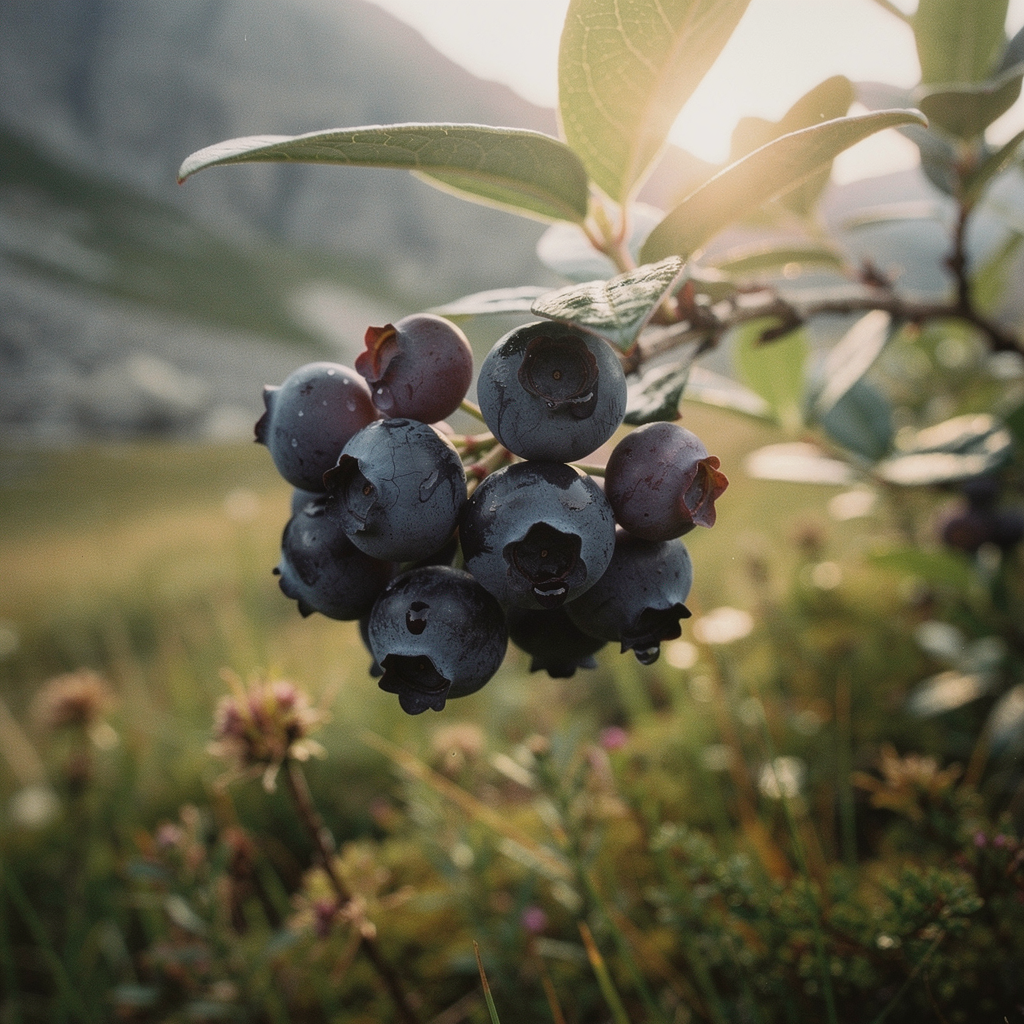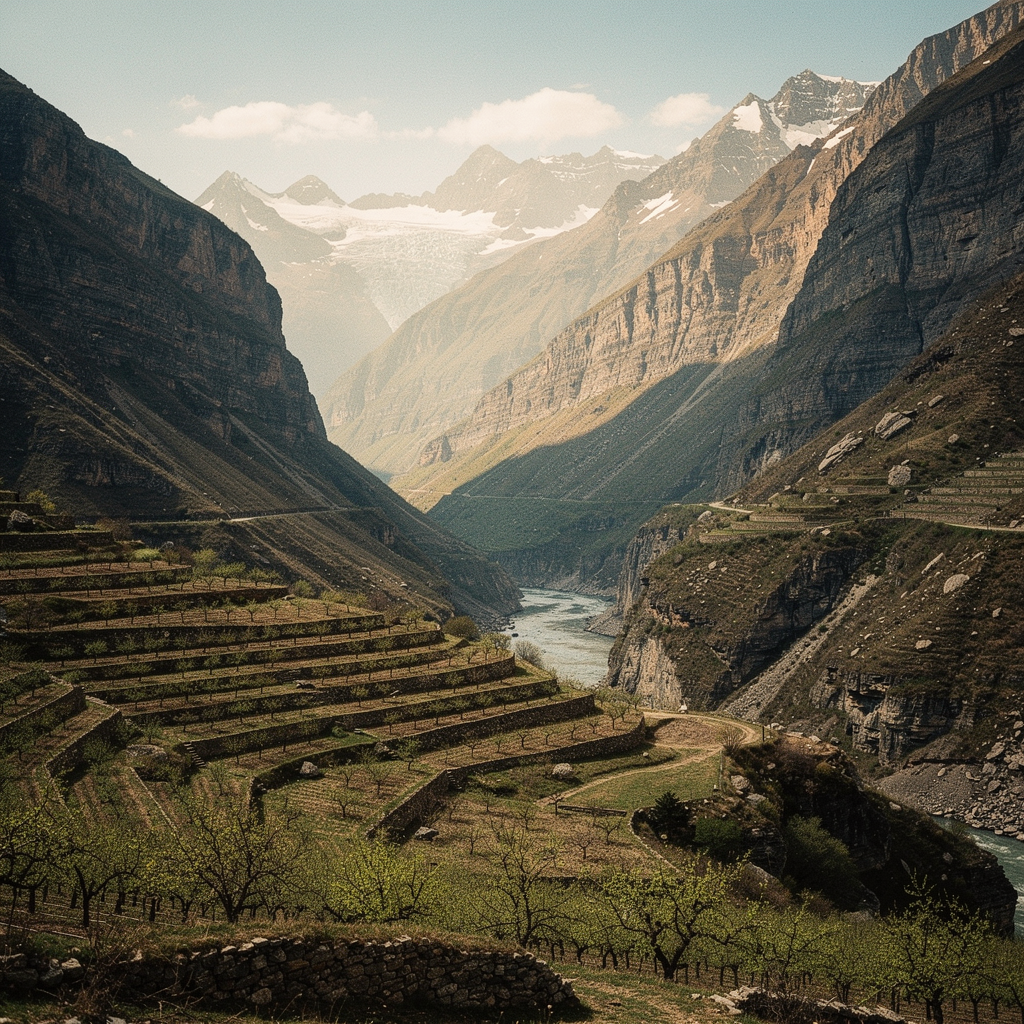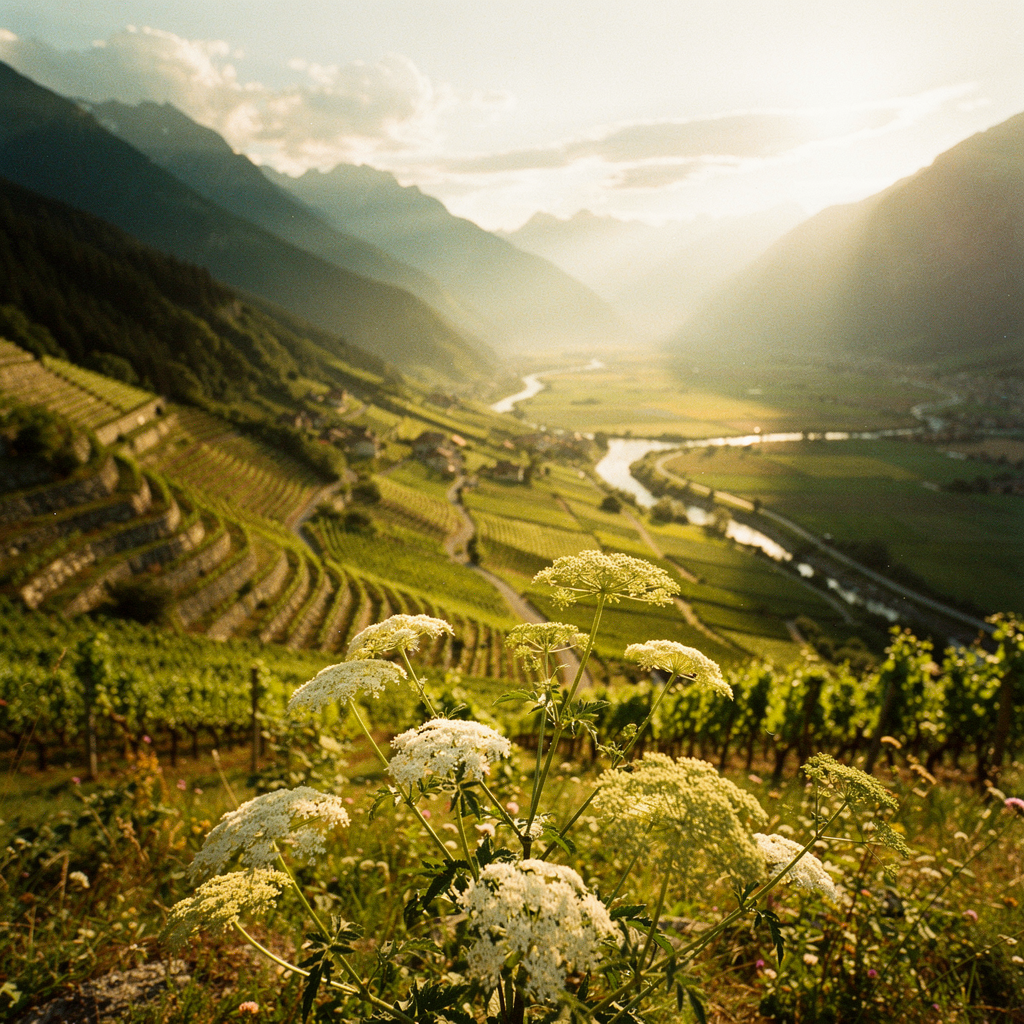
Valais knows no half-seasons. Summer arrives suddenly, intensely, with a light that exists nowhere else — reflected from the rock walls of the Rhône Valley, concentrated between the mountains. On the longest day of the year, the valley smells of dry grass, ripe fruit and the resin of larch forests. That is the moment Solstice was made for.
The Idea Behind the Name
Solstice — from the Latin solstitium, the sun's standstill. The day the sun reaches its highest point and pauses a moment before descending again. For us this is not an astronomical date. It is a boundary: everything that can be harvested before the solstice is in the Solstice. Everything that ripens after belongs to Rarner Gin or Hiemalis Gin.
This logic forces a decision. It prevents a gin from being made «sometime in summer». Solstice is made on a specific date, with botanicals that are at their peak on that date.
The Botanicals at the Solstice
Late June is a special time for alpine botanicals. The elderflower is at its peak — not the last, fading umbels of early summer, but full, fresh, heavily fragrant blossoms just before they fall. Wild thyme flowers on the sun-warmed rocks below Raron. Chamomile flowers stand open on the mountain meadows.
These three — elderflower, thyme, chamomile — form alongside juniper the aromatic centre of Solstice. They are summer botanicals in the most literal sense: harvested at the height of summer, processed in the same week.
What Freshness Does
Fresh botanicals behave differently in the distillate from dried ones. Elderflower fresh has a scent that partly changes after drying — something of the green, the immediate, is lost. In Solstice we use fresh elderflowers for exactly this effect: a gin that smells of fresh blossom, not dried tea.
This makes Solstice the most short-lived of our gins. It is only available in the period following the summer solstice — once sold out, you wait until next year. This is not artificial scarcity. It is the logic of seasonal produce.
In the Glass: When and How
Solstice belongs in the long Valais summer evening. Neat, lightly chilled — it also tolerates a cube or two of ice without harm. For a drink: Solstice, grapefruit juice, a splash of soda, fresh mint. That is everything. No complex recipe, no effort. Just summer in a glass.
Combined with fresh garden strawberries or an elderflower syrup from the same month — the gin and its botanicals from the same moment of the year. That is seasonal drinking.
Thinking Seasonally as an Attitude
Rarner Gin for summer. Hiemalis Gin for winter. Solstice for the peak of the year, the long day, the full sun. Three gins, three seasons, one distillery — and the conviction that a drink should know when it wants to be drunk.
This is not a marketing strategy. It is the way Valais thinks.